Reverse Osmosis vs Water Filter: What's the Difference?
Reverse osmosis and standard water filters use different methods and are suited to different needs. The right option depends on the water quality issue, the level of filtration required, installation preferences and maintenance.
Published 31 August 2026 Updated 31 August 2026 10 min read
The short answer
A standard filter improves specific characteristics of water — most often taste, odour and particles — while reverse osmosis separates a much broader range of dissolved substances using a membrane. If your issue is chlorine taste, a filter is usually enough. If you want more extensive treatment of dissolved content, RO is the relevant technology, with more installation and maintenance involved.
Filtration method
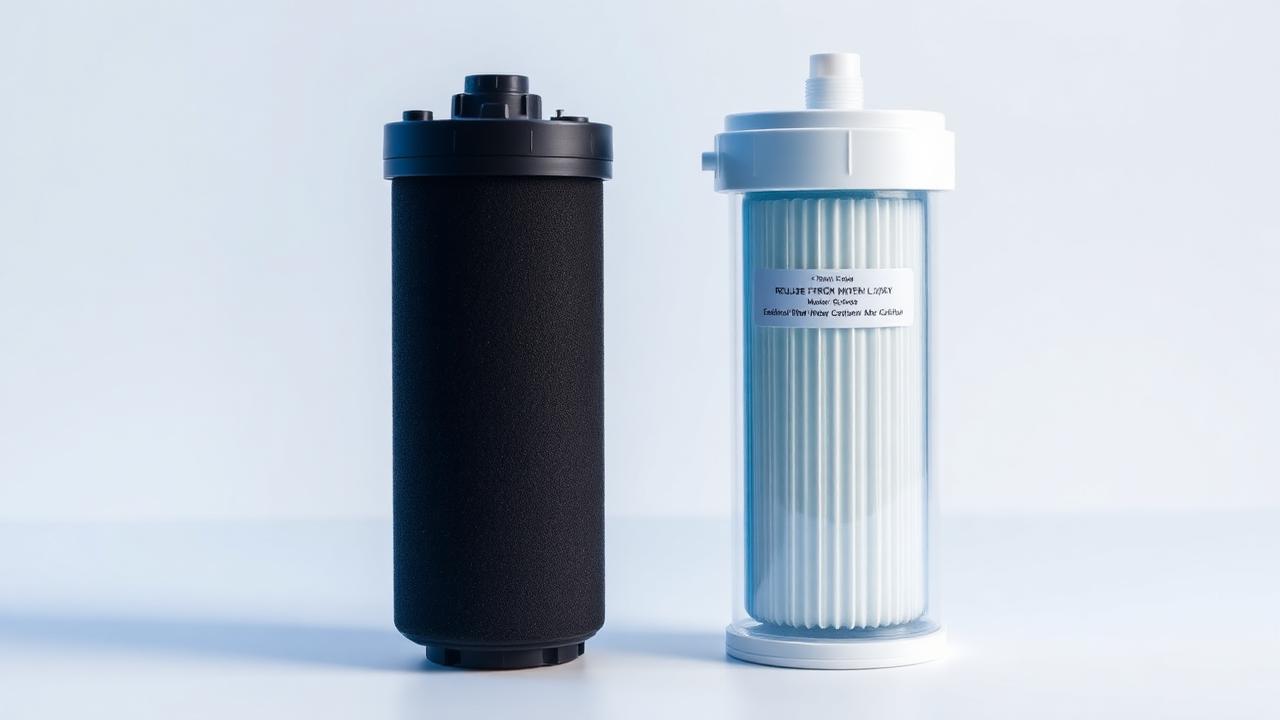
Standard filters work by mechanical straining (sediment cartridges) or adsorption (activated carbon), and their capability depends entirely on the medium used. Reverse osmosis works by pressure-driven separation across a semi-permeable membrane, which is a fundamentally different mechanism — see how reverse osmosis works.
Contaminants reduced
Carbon filters are widely used for chlorine taste and odour and various organic compounds. Sediment filters handle suspended particles. RO membranes additionally reject a large share of dissolved salts and many metals. In every case, the honest answer comes from the product's tested performance data, not from the category name.
Taste
Both approaches usually improve taste, but differently. Carbon removes the chlorine flavour while leaving the mineral character intact. RO removes most dissolved minerals, producing water many describe as very clean or, to some palates, flat. Remineralisation cartridges can add mineral content back if preferred.
Minerals
Standard filters leave calcium and magnesium in the water. RO reduces them along with other dissolved salts. Neither is inherently right — it is a preference, and dietary mineral intake comes mainly from food.
Water use
A standard filter passes all the water through to the tap. An RO system sends a portion of the feed water to the drain to carry away rejected substances. In a country where water is a limited resource, ask suppliers about the recovery ratio and whether a higher-efficiency configuration is available.
Installation
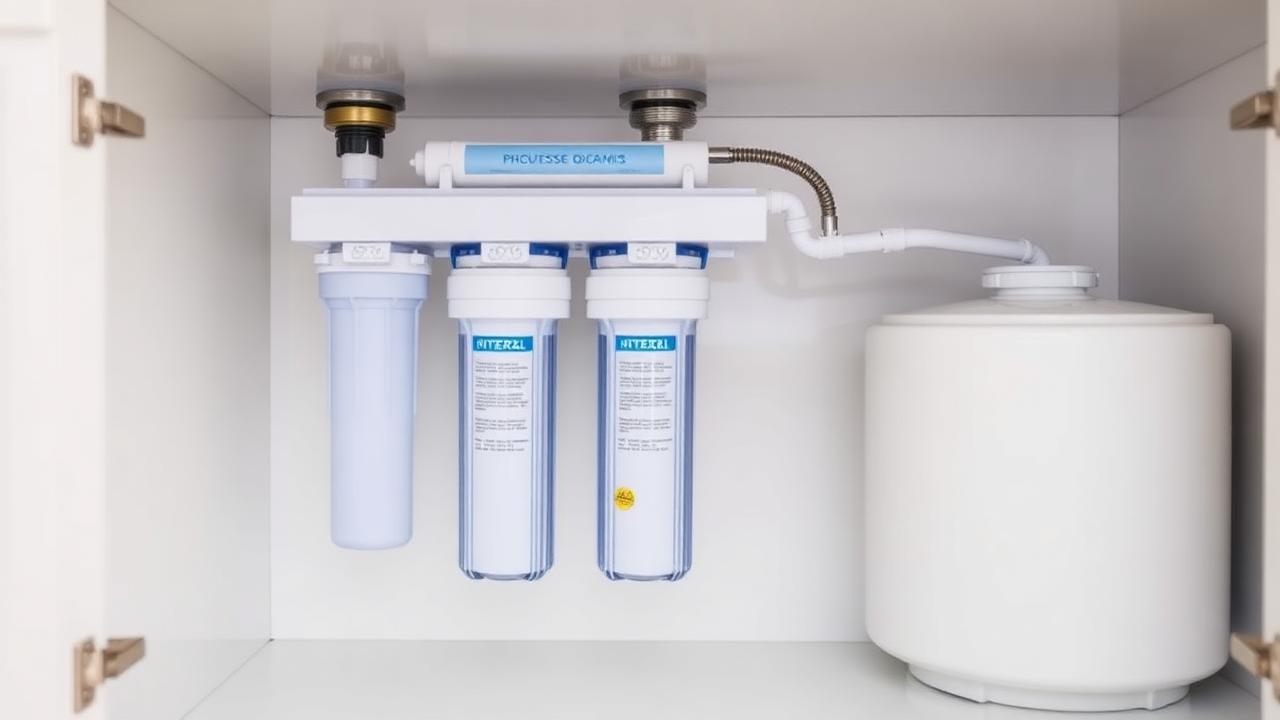
Jug and countertop filters need no plumbing. Under-sink cartridge filters need a tee connection and sometimes a separate tap. RO usually needs cabinet space for the housings and tank, a dedicated tap, a drain connection and adequate mains pressure, so professional installation is common.
Maintenance
Filters require cartridge replacement on a schedule. RO requires the same for its pre- and post-filters, plus periodic membrane replacement and occasional tank pressure checks. RO ownership therefore involves more parts and a slightly higher ongoing commitment.
Cost factors
Equipment cost, which is generally lower for cartridge filters than for RO systems.
Installation, including plumbing, a separate tap and a drain connection.
Replacement consumables and how often they are needed.
Membrane replacement for RO, less frequent but more expensive than a cartridge.
Servicing, callouts and whether a maintenance plan is available.
Space requirements
An under-sink cartridge filter is compact. A conventional RO system with a storage tank takes up a significant part of a sink cabinet, although tankless designs are more compact. Measure the cabinet before committing.
Typical household use
Many households in Cyprus start with an under-sink carbon filter for drinking and cooking water, and move to RO when they want broader filtration or when a test result points to dissolved substances they wish to reduce. Households dealing with limescale need a water softener regardless of which drinking-water option they choose.
Business use
Cafés, restaurants and offices often specify filtration for consistent taste and to protect coffee machines and ice makers, and sometimes RO for specific process requirements. Capacity, flow rate and a reliable service contract matter more in commercial settings — see commercial water treatment.
Full comparison table
Water filter
Reverse osmosis
Filtration method
Varies by medium
RO membrane
Installation
Varies, from none to under-sink
Usually under-sink with a dedicated tap and drain
Maintenance
Filter replacement
Filters plus membrane
Water use
Depends on system, no reject water
Can produce wastewater
Best suited for
Depends on the filtration type chosen
More extensive filtration needs
Minerals
Retained
Substantially reduced, remineralisation optional
Flow rate
Generally full tap flow
Slower production, buffered by a tank
Cost
Varies
Varies, generally higher over time
Water filter vs reverse osmosis at a glance
Which one should you choose?
Choose a standard filter if...
Your main concern is chlorine taste, odour or visible particles.
You want a simple installation, or you rent and cannot alter plumbing.
You prefer to keep the mineral content of your water.
You want the lowest ongoing maintenance commitment.
Consider reverse osmosis if...
You want broader reduction of dissolved substances at the kitchen tap.
A test result identifies dissolved content you want to address.
You have cabinet space, sufficient pressure and access to a drain.
You are comfortable with membrane maintenance and some reject water.
The issue appears at some taps but not others, which often points to plumbing.
You are making a decision for a business where consistency matters.
Key takeaways
Filters and RO are different tools, not competing versions of the same product.
Carbon filtration is simpler and cheaper; RO is broader but more demanding.
Neither addresses limescale — that requires softening at the point of entry.
A water test is the cheapest way to avoid buying the wrong system.
Summary
Decide based on the problem you can actually identify, the property you are installing in and the maintenance you are willing to commit to. Once the system type is clear, the supplier decides how well it performs over the following years. Compare water filtration companies in Cyprus on coverage, installation, maintenance and after-sales support.
Frequently asked questions
Is reverse osmosis better than a water filter?
Neither is better in every situation. RO provides broader reduction of dissolved substances, while a carbon or sediment filter is simpler, cheaper and often sufficient for taste, odour and particles. The right choice depends on your water and your priorities.
Can I use a water filter and reverse osmosis together?
Yes, and most RO systems already combine both: sediment and carbon pre-filters protect the membrane, and a carbon post-filter polishes the taste. Some properties also add whole-house filtration or softening before the RO unit.
Does reverse osmosis remove limescale from my pipes?
No. An under-sink RO unit only treats water at one tap. Limescale throughout a property is caused by hardness in all the water entering the building, which is addressed by a water softener installed at the point of entry.
Which is cheaper to run, RO or a standard filter?
A standard cartridge filter is generally cheaper to run, since it has fewer parts and no membrane to replace. RO involves pre-filters, a post-filter, periodic membrane replacement and some reject water, so long-term running costs are usually higher.
Compare Water Filtration Companies in Cyprus
See coverage, physical locations, product range, installation, maintenance and after-sales support side by side.
How water filters work, the main system types used in Cyprus homes and businesses, what filtration can and cannot remove, and how to choose a system and a supplier.
How reverse osmosis membranes separate dissolved substances from water, what an RO system is made of, what maintenance it needs and where it fits in a home.
TDS measures the total dissolved solids in water. Here is what a TDS meter actually tells you, what it cannot tell you, and how it relates to taste, hardness and reverse osmosis.